
Corrugated Packaging 101: Materials, Designs, and Uses
Materials: Liners and Fluting
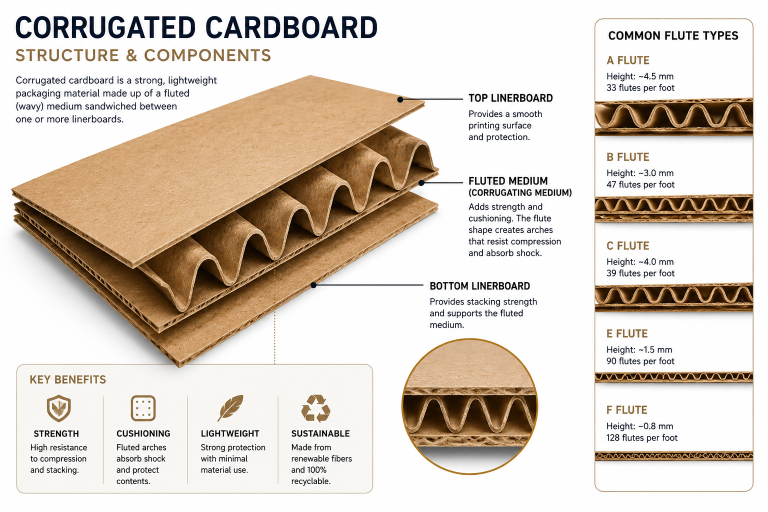
Corrugated board (fiberboard) is a sandwich of flat liner layers and an inner corrugated (fluted) medium. The liners form smooth outer and inner surfaces, while the fluting provides rigidity and shock absorption. Liner material can be kraftliner (strong, virgin wood fibers for high strength and moisture resistance) or testliner (100% recycled fiber for cost efficiency). Premium boxes often use bleached white kraft liner for printing, whereas the common brown linerboard is natural and eco-friendly.
The corrugating medium itself may be made from virgin or recycled pulp. High-strength grades use semi-chemical fluting (virgin fiber) for heavy loads and moisture resilience, while standard fluting (“wellenstoff”) is 100% recycled fiber and very sustainable. Together, the liner–fluting combination determines the box’s final performance. For example, a white kraftliner–wellenstoff combo yields a box that is strong and printable, whereas a recycled liner with recycled fluting is fully eco-friendly for everyday shipments.
Flute Types and Wall Constructions
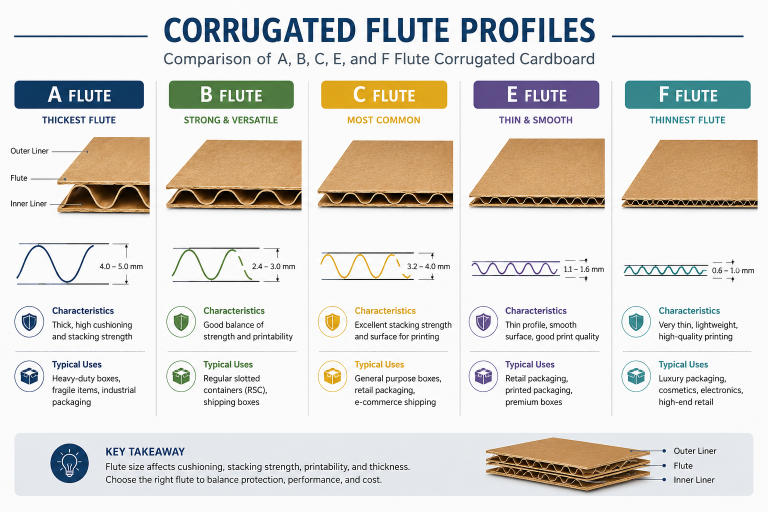
Corrugated boards are classified by their flute type (A, B, C, E, F, etc.) and how many fluted layers they contain (single, double, triple wall). Each flute type has a characteristic thickness and number of waves per foot, affecting cushioning and flatness. In general:
- A-Flute (~4.5 mm thick): Largest flute; about 33 flutes/ft. Offers maximum cushioning and crush resistance. Common for heavy, fragile items (appliances, glass) and multiwall construction.
- B-Flute (~3.0 mm): Medium height; ~47 flutes/ft. Good crush resistance and excellent flat surface for printing. Often used for canned goods, glass bottles, retail displays, and die-cut boxes.
- C-Flute (~3.5 mm): Most common flute; ~39 flutes/ft. Balances cushioning and strength for general shipping. Typical single-wall shipping boxes (like RSCs) use C-flute.
- E-Flute (~1.5 mm): Fine flute; ~90 flutes/ft. Creates a smooth surface for high-quality graphics and saves space. Used for consumer goods, cosmetics, mailers and lightweight but presentable packaging.
- F-Flute (~0.8 mm): Thinnest available; ~128 flutes/ft. Very flat face, ideal for premium mailers, folders, and small boxes with crisp folds.
Wall construction refers to how many fluted layers are sandwiched between liners. A single-wall board has one fluted medium (two liners) and is used for most everyday boxes. A double-wall board (five layers: two flutes, three liners) is much stronger; it often combines two flute types (e.g. BC or EB) to create a thicker panel. A triple-wall board (seven layers) is very rigid and used for extreme heavy-duty needs (e.g. large machinery, drums).
The table below summarizes common constructions:
Construction | Flute(s) | Thickness (mm) | Typical ECT (lb/in) | Typical Uses |
Single-wall | E-flute | ~1.6 | ~32 | Small consumer goods, cosmetics, mailers. |
Single-wall | B-flute | ~3.2 | 32–44 | Retail displays, glassware, interior pads. |
Single-wall | C-flute | ~3.5 | 32–44 | General shipping boxes, e-commerce, beverages. |
Double-wall | E + B (EB) | ~5.7 | 44–55 | Heavy appliances, electronics; print-friendly. |
Double-wall | B + C (BC) | ~7.0 | 44–55+ | Bulk goods, industrial shipments, pallets. |
Triple-wall (A+B+C) | A + B + C | ~12–14 | >100 | Extreme heavy loads (steel, auto parts, etc.). |
Note: ECT = Edge Crush Test rating. Higher ECT means higher stacking strength. Bursting strength (not shown) is another measure (in psi or Mullen index) of puncture resistance, but ECT is the common specification for box strength. In practice, a 32 ECT single-wall box (common standard) safely supports on the order of 60–70 lbs stacked, whereas a 44 ECT or double-wall box carries significantly more.
Box Design and Assembly
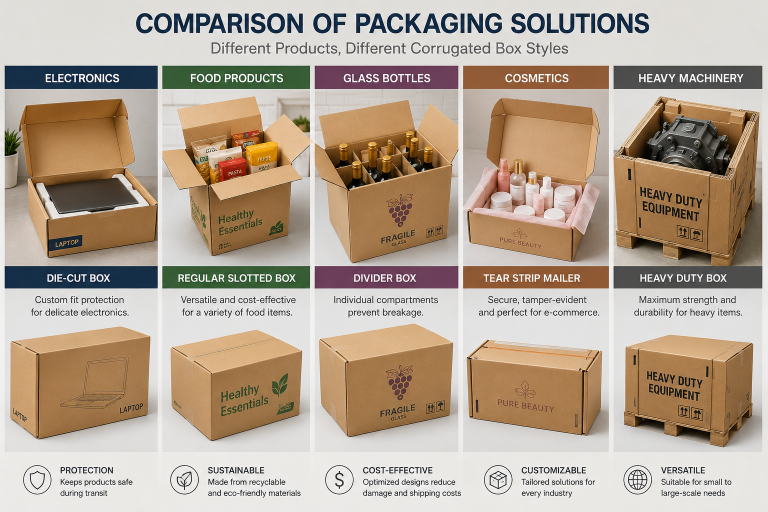
Beyond material and flute selection, packaging design defines the box shape and function. The most typical design is the Regular Slotted Container (RSC), where the flaps on the top and bottom meet at the center when folded. RSCs are made by slotting and scoring a flat corrugated sheet and then folding/taping the flaps to form the box. Key design considerations include slot placement (single or double-wall overlap), scoring (for clean folds), and whether to use tape or glue (water-activated kraft tape is common for heavy loads).
For custom or high-end packaging, die-cut boxes are used. These are cut with steel dies into special shapes—examples include mailer boxes, gift boxes, and unique point-of-sale display shapes. Die-cutting allows adding handles, windows, locking tabs, and other features directly into the box design. It also yields a neater look (no loose flaps). Slotting machines can pre-cut liners for easy hand-assembly as well.
Inside the box, protective packaging often uses corrugated inserts and cushioning. Corrugated sheets or honeycomb panels can be used as dividers, corner protectors, or void fillers. For example, wine shippers use corrugated partitions between bottles. If extra padding is needed, crumpled paper, foam peanuts, or molded pulp (all recyclable) may accompany the box. In many cases, simply increasing the board’s flutes or switching to a double-wall box provides the needed cushion. Design features like gusseted corners or folded edges add rigidity without extra material.
Standard industrial design tools (FEFCO codes, etc.) guide how boards are cut and creased. For simplicity, an engineer or designer will match the board grade (flute/wall) to the box type, ensuring the assembled corrugated box meets the required stacking strength and burst strength for its contents.
Strength Metrics: ECT, Burst, and Stacking Strength
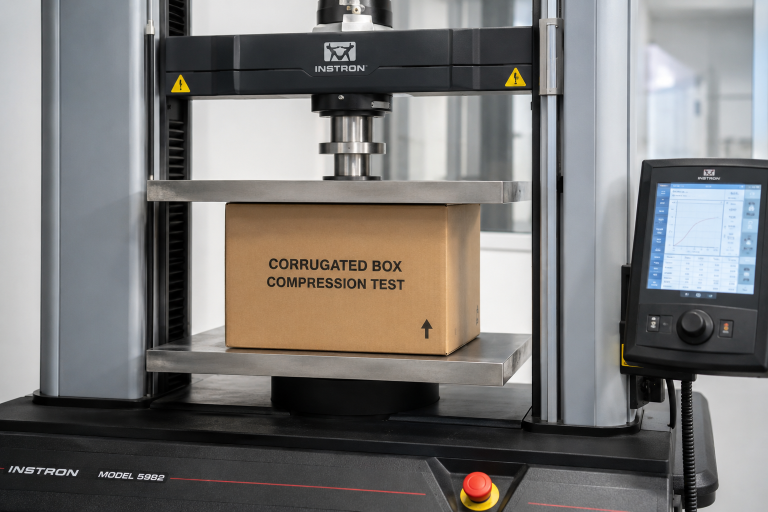
Understanding corrugated strength is crucial. The Edge Crush Test (ECT) measures how much force a board’s edge can withstand per inch width. In practice, higher ECT means a box can be stacked higher without collapsing. Common ECT ratings are 32, 44, and 55 lbs/in. For example, 32 ECT single-wall boxes are the North American standard for light-to-medium loads, while 44 ECT is specified for heavier loads or increased stacking height.
Burst strength (Mullen test) is an older measure of how much hydrostatic pressure (in psi or lbs) causes the board to burst. A “200# Mullen” was often paired with 32 ECT, but they aren’t directly interchangeable. Essentially, burst strength indicates resistance to puncture and overall board integrity. In modern packaging, ECT is more directly related to stacking and shipping needs.
Stacking strength of a finished box depends on ECT, box dimensions (perimeter and height), and handling. A rule of thumb formula (the McKee formula) can estimate the ultimate box compression strength. In design, engineers ensure the chosen corrugated board (and box style) will safely support the anticipated stack loads in warehouses or retail displays.
Choosing the Right Corrugated Board
Packaging professionals often follow a decision process considering product weight, fragility, and shipping environment. The flowchart below illustrates a typical selection path:
A[Product weight category] –> B{Weight class}
B –>|Light| C[Assess fragility and presentation]
B –>|Heavy| D[Assess fragility and protection needs]
C –>|Fragile / High-value| E[Single-wall (E/B-flute) + cushioning inside]
C –>|Robust / Standard| F[Single-wall (C-flute) box]
D –>|Fragile / High-value| G[Double-wall (A/BC-flute) + extra cushioning]
D –>|Robust / Standard| H[Double-wall (BC/EB-flute) box]
E –> I{Shipping conditions}
F –> I
G –> I
H –> I
I –>|Mild / Short transit| J[Use the chosen board as-is]
I –>|Harsh / Long transit| K[Increase ECT or wall count (e.g. triple-wall)]
- Product Weight: For light goods (<5–10 kg), single-wall board is usually fine. For heavy items (>20–30 kg), double-wall or even triple-wall is recommended.
- Fragility: Fragile or high-value products (glassware, electronics) lean toward thicker flutes (A or B) and higher board grades; less fragile goods can use C- or E-flute.
- Protection Needs: If extra protection is needed (shock, vibration), choose a coarser flute or double-wall and add interior corrugated padding.
- Shipping Conditions: For short, local shipments, standard single-wall (32 ECT) often suffices. For long-haul, overseas, or high-stacking, use a board with higher ECT (44 or 55+) or more walls. Moisture or cold environments may call for water-resistant coatings or kraft liners.
This process ensures the selected corrugated packaging matches the product and logistics requirements without overkill. Over-specifying strength wastes cost; under-specifying risks damage.
Applications and Protective Packaging
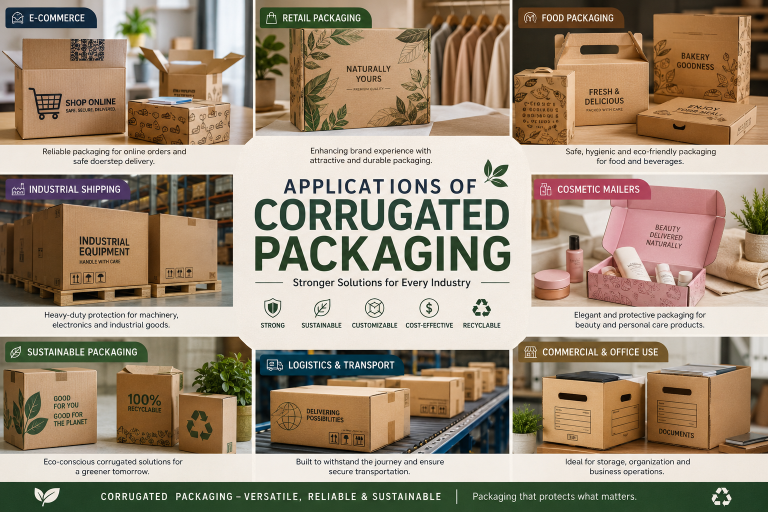
Corrugated boxes are ubiquitous across industries. Common applications include:
- E-commerce & Retail: Lightweight single-wall boxes (often C- or E-flute) for apparel, electronics, books, and general goods. Crisp graphics on E-flute enhance branding.
- Food & Beverage: Customized corrugated cartons for produce or bakery items. For example, B-flute trays and die-cut inserts protect glass bottles and cans. Wax-coated corrugated is used for refrigerated or moist environments.
- Industrial & Heavy Goods: Double-wall (BC or EB flutes) for appliances, auto parts, and machinery. These boxes handle higher stacking strength and can include anti-scuff kraft facing.
- Protective Inserts: Corrugated is also used internally. Honeycomb panels or partitions made of corrugated are eco-friendly void-fill. Custom die-cut corrugated inserts hold multiple items (e.g., wine shippers, electronics trays).
- Brand Packaging: Luxury goods or cosmetics use fine flutes (E/F) and white liners for a premium feel. Point-of-sale displays and retail packaging often combine B/C flutes for sturdiness with high-quality printing on the surface.
In every case, packaging design principles apply: matching strength (ECT, burst) to product weight/volume, adding cushioning or bracing for impact, and optimizing material for cost and appearance.
Sustainability and Recycling
Corrugated packaging is notable for its sustainability. It is made from renewable wood fibers and is one of the most recycled materials. In the U.S., corrugated “cardboard” is recycled more than any other packaging material, with an average of over 50% recycled fiber in a new box. The remaining virgin fiber (in kraft liner, for example) is often certified by forestry programs. Because corrugated fiberboard can be repulped 5–7 times, old boxes readily become new boxes, cardboard, or paper products.
Key environmental benefits:
- Recyclable: Nearly 100% of a corrugated box (minus tape) can be recovered and recycled, diverting waste from landfills.
- Renewable Resource: Made from wood, with sustainable forestry practices supplying virgin fiber.
- Low Carbon: Compared to plastics or metals, corrugated has a lower carbon footprint and does not require fossil resources.
- Recycled Content: Even “100% recycled” claims are balanced by the need for some fresh fiber for strength. Still, most corrugated boxes contain high recycled content.
Packaging engineers often choose corrugated boxes to meet eco-friendly goals. They can advertise “100% recyclable packaging” or “made from recycled materials.” Combined with its performance, corrugated cardboard remains a cornerstone of green packaging initiatives. Proper design (using minimal material for required strength) and the industry’s recycling infrastructure make corrugated packaging highly sustainable.
Conclusion
Corrugated packaging is a versatile, protective, and sustainable solution for shipping and storing goods. By understanding the materials (liners and fluting), flute types (A, B, C, E, etc.), and wall constructions (single, double, triple), one can tailor boxes to virtually any product. Standard tests like ECT and burst strength guide the engineer to the right board grade. Modern box design techniques (die-cutting, slotting) and interior cushioning ensure products arrive intact and presented on-brand. Finally, the innate recyclability of corrugated makes it an ideal material in the age of eco-conscious packaging design.
Whether it’s a simple C-flute shipping box or a complex die-cut display, corrugated boxes deliver the combination of strength and sustainability that businesses and consumers expect. By following best practices (as outlined above) and matching the board to the product, designers can optimize both cost and performance in protective packaging solutions.